
Listen to "Fascivaad Ka Saathi"
Stream this track directly from Spotify
About Fascivaad Ka Saathi
Fascivaad Ka Saathi stands as a significant release in the musical journey of Abu Sayed. Officially unveiled on March 7, 2025, this Track highlights the evolution of Sayed as a contemporary Bangladeshi Musical Artist. With its release in March 2025, it has quickly garnered attention for its unique blend of traditional melodies and modern production techniques.
As a multifaceted Composer and Music Producer, Abu Sayed ensures that every element of Fascivaad Ka Saathi resonates with authenticity. Featured on the project Fascivaad Ka Saathi, this track spans 2:53 of pure musical artistry. The detailed arrangement and heartfelt lyrics showcase his prowess as a Lyricist, making it a must-listen for audiophiles and casual listeners alike.
Experience the depth of Fascivaad Ka Saathi by streaming it directly on this platform. Whether you are a long-time follower of Abu Sayed or a new listener discovering his work in 2025, this Track offers a compelling glimpse into the future of Bangladeshi music. Support independent artists by engaging with this official release.
Listener Reviews


Related Playlists
Playlists that match this track or its album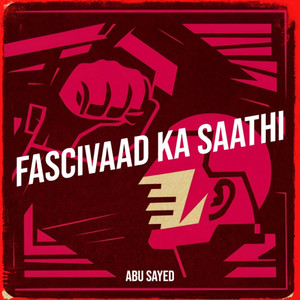
Share this Track
Related Videos
Behind the Song
Song insights and analysis
Meaning
Fascivaad Ka Saathi presents the idea of fascism not as a distant system but as a close, intimate presence—an unwanted companion that insinuates itself into daily life. The title suggests a paradox: something that should offer safety and belonging becomes a corrosive ally. Symbolically, the song may treat fascism as a magnetic yet dangerous mirror, luring listeners with promises of order, unity, and protection while quietly eroding pluralism, dissent, and humanity. The imagery often shifts between warmth and menace, hinting at how seductive rhetoric can wrap itself in familiarity and camaraderie even as it tightens its grip.
Thematically, the work likely interrogates complicity and the seductive psychology of power. It explores how ordinary people, communities, and even artists can become “friends” to oppression through fear, nationalism, or us-versus-them storytelling. The song may critique the normalization of brutality—how slogans, banners, and ritualized chants numb moral judgment and blur the line between defense and assault. By naming the relationship as a “saathi,” it underscores the irony: something that should be a source of support ends up becoming a partner in harm, urging listeners to examine their own loyalties and the social forces that recruit them.
Ultimately, the message tends toward awakening and resistance. If fascism is portrayed as a seductive companion, the corrective is ethical vigilance, solidarity with the marginalized, and a commitment to truth over comfort. The tone can oscillate between lament and defiance, signaling that true belonging comes from compassion, pluralism, and courage to reject demagogic paths. The artist invites the audience to choose companionship with justice over complicity, transforming a potentially dangerous ally into a call to collective action and human dignity.
Story
That morning I woke with a line curling behind my ribs, the city outside my window wearing a thousand moods. I wasn’t chasing a hit; I was chasing a feeling—how to describe the friend who never nods off when your thoughts run too wild, the ally you keep in your pocket when fascinations bloom like wildflowers. The phrase “Fascivaad Ka Saathi” kept circling in my notebook, a strange marriage of obsession and companionship. On a napkin I doodled a simple guitar figure and a heartbeat-like kick drum, and I told myself the song would travel from the street to the ceiling, from rumor to confession. By evening I had a chorus that sounded like a conversation with an old friend you meet again after years.
Studio night became the map. I laid down a warm bass line, then a dusty Rhodes piano that felt like sunlight through a car window. We wandered through percussion—an uptick in the rhythm that mimicked a gallop, then a quiet pad that felt like fog lifting. I recorded a stack of vocal takes, each one a different version of searching: “you stay, you chase me,” “you hold the doubt, I hold the dream.” A wind captured from a city alley became a siren-like lead, while a violinist added a crescent-moon shimmer. The production grew in layers; I cut, stitched, and re-stitched until the chorus perched on the edge of a truth you almost hear in your sleep. We mixed with analog warmth and let the tape hiss tell the story rather than hide it.
When the song finally went to air, the world heard a handshake between longing and loyalty. “Fascivaad Ka Saathi” was meant to be a companion for those who chase ideas like stars—unclear, brilliant, and just within reach. It was written in the margins of a restless weekend and polished in a room that smelled of coffee and old vinyl. Released: 2025-03-07, it stood not as a single moment but as a doorway, inviting listeners to keep pace with their own fascinations and the friends who walk beside them.
Themes
- Resistance against oppression and authoritarianism
- Unity and solidarity across communities
- Democracy, justice, and accountability
- Courage, sacrifice, and hope for a better future
Moods
Overview
Abu Sayed's "Fascivaad Ka Saathi" opens the eponymous single with a sharp 2:53 frame (Track 1 of the Fascivaad Ka Saathi release), delivered on 2025-03-07. From the producer’s chair, the track is built for immediacy: a tight rhythm section, crisp drums, and a vocal front-and-center, layered with subtle atmospheric textures that circle the hook without overwhelming it. The arrangement emphasizes economy and impact, keeping the mix punchy enough for radio while preserving warmth and intimacy.
From a composer’s perspective, the melody centers on a compact, repeatable motif that travels through verse and chorus, with brief harmonic shifts that sustain momentum across the runtime. The result is a lean, memorable musical arc that feels complete within a two-and-a-half-minute window, with a concise lift into the chorus and a clean, reflective outro.
As the lyricist, the words distill resilience and solidarity into vivid, accessible imagery, turning a political premise into a personal, anthemic chorus that resonates after the track ends. The lead single positions Abu Sayed as a fresh voice in contemporary music, blending electronic textures with organic warmth and a sharpened social edge—perfect for editorial highlights and playlist curation.
About "Fascivaad Ka Saathi"
"Fascivaad Ka Saathi" is a song by Abu Sayed from the single "Fascivaad Ka Saathi". This track has a duration of 2:53 and is track number 1 on the album.
Stream "Fascivaad Ka Saathi" on Spotify, Apple Music, Amazon Music, and all major streaming platforms. Click the play button above to listen now!
Stream on Other Platforms
Listen to Abu Sayed on your favorite platform
